








Inside the Hidden Economy of a Pro-Am at Bay Hill
Field notes from the Arnold Palmer Invitational presented by Mastercard.

At 7:10AM, the driving range at Arnold Palmer’s Bay Hill Club & Lodge is already divided. A sign near the entrance directs players to two different sides: amateurs right and pros left. It’s a small detail, but it establishes the hierarchy of the day before a single ball is hit.
Amateurs head toward the right side of the range, shaking off the rust from a long winter. Across to the left, PGA TOUR players move through their warmups under the watchful eye of coaches equipped with launch monitor data.
At one point, someone from the pro side (it’s not clear whether it’s a player or a caddie) calls across jokingly: “Hey, don’t you belong over there?” The line gets a few laughs. But it also captures the dynamic of a pro-am perfectly. For one morning, two different versions of golf occupy the same space.

Josh Reidelbach/The Dan Evans Show
Josh Reidelbach/The Dan Evans Show
Josh Reidelbach/The Dan Evans Show
What Amateurs Are Actually Buying
From the outside, a pro-am looks straightforward: corporate guests paying for the chance to play alongside a professional golfer during tournament week. But the experience reveals something deeper. What participants are really buying isn’t just a round of golf, it’s proximity. A few hours inside the rhythms of professional golf that normally exist behind ropes and credential checkpoints.
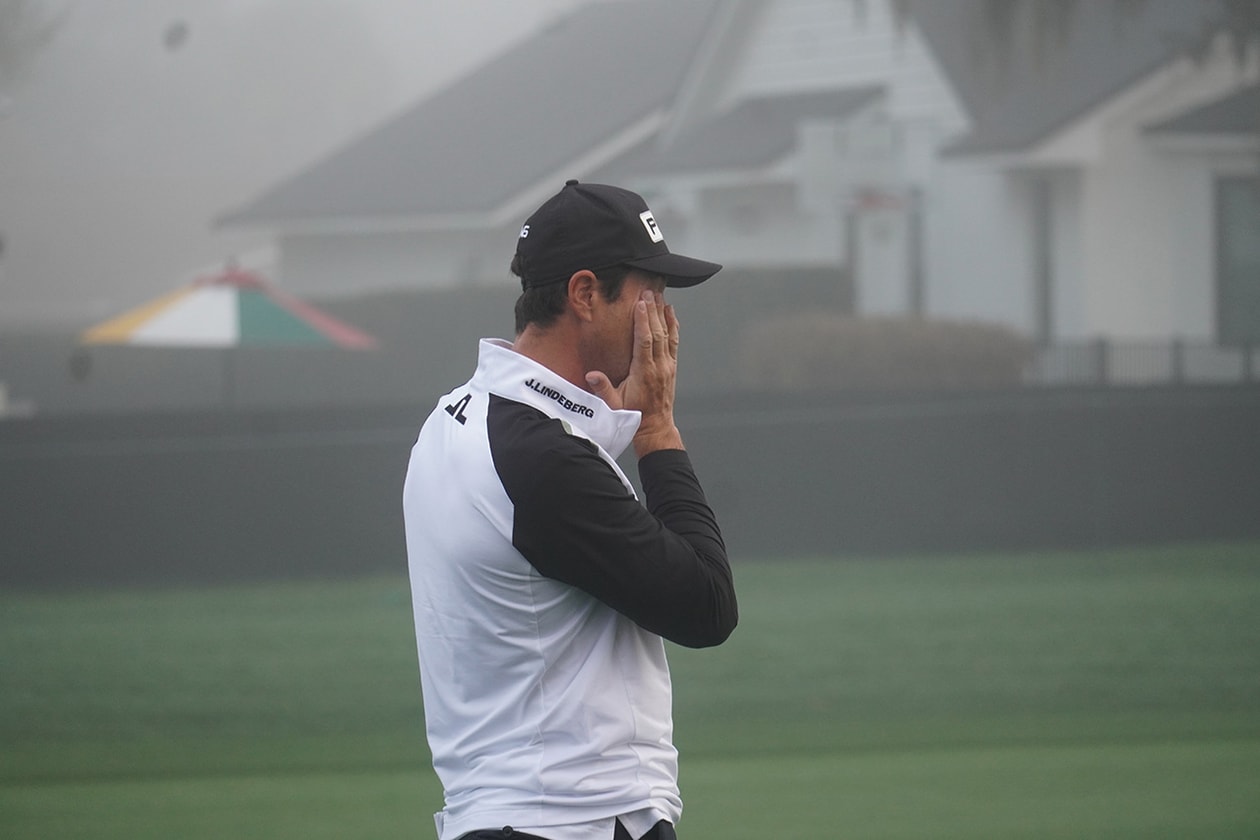
The day begins early. Our group’s tee time is 7:10AM, early enough that the course is still covered in mist when we reach the first tee. The landing areas are barely visible down the fairway, but there’s no delay. The instruction is simple: get out there and start playing.
In our case, the early start was a choice. Pro-am groups are selected through a lottery system. When your number comes up, you choose a player. The early tee time was the price of securing a spot with Viktor Hovland, one of the game’s biggest personalities, as well as one of Mastercard’s ambassadors.
That choice had consequences. Specifically, it cost us sleep. And it cost Hovland some as well. When he’s the last one to arrive at the tee, right at 7:10, he jokes about the scheduling. He’s drawn similarly early tee times in recent pro-ams, he says, and might need to “talk to someone about that.” Asked when he woke up that morning, he pauses for a moment and says “5:50.” It turns out the amateurs had beaten him to the punch.
The Tour Player’s Second Job
For professionals, pro-am day involves both preparation and hospitality. As Sam Burns explains: “On Wednesday, pro-am day, it’s similar to a normal practice round, but you’re also entertaining the guests you’re playing with. You get to talk with them and learn about them.”
In other words, players become part competitor, part host. The rhythm of the round reflects that balance. “Usually 30 seconds to a minute you’re focused on your shot,” Burns says, “and then you’re back chatting with them.”
Watching it unfold up close, the shift is noticeable. A conversation about travel or family might continue as the group walks up the fairway. Then, without announcement, the player starts walking toward his ball. The caddie calls out a few yardages and hands over a club. For a brief window, the player is locked in and the social dynamic disappears. After the shot is struck, the conversation resumes.
Inside the Ropes
Josh Reidelbach/The Dan Evans Show
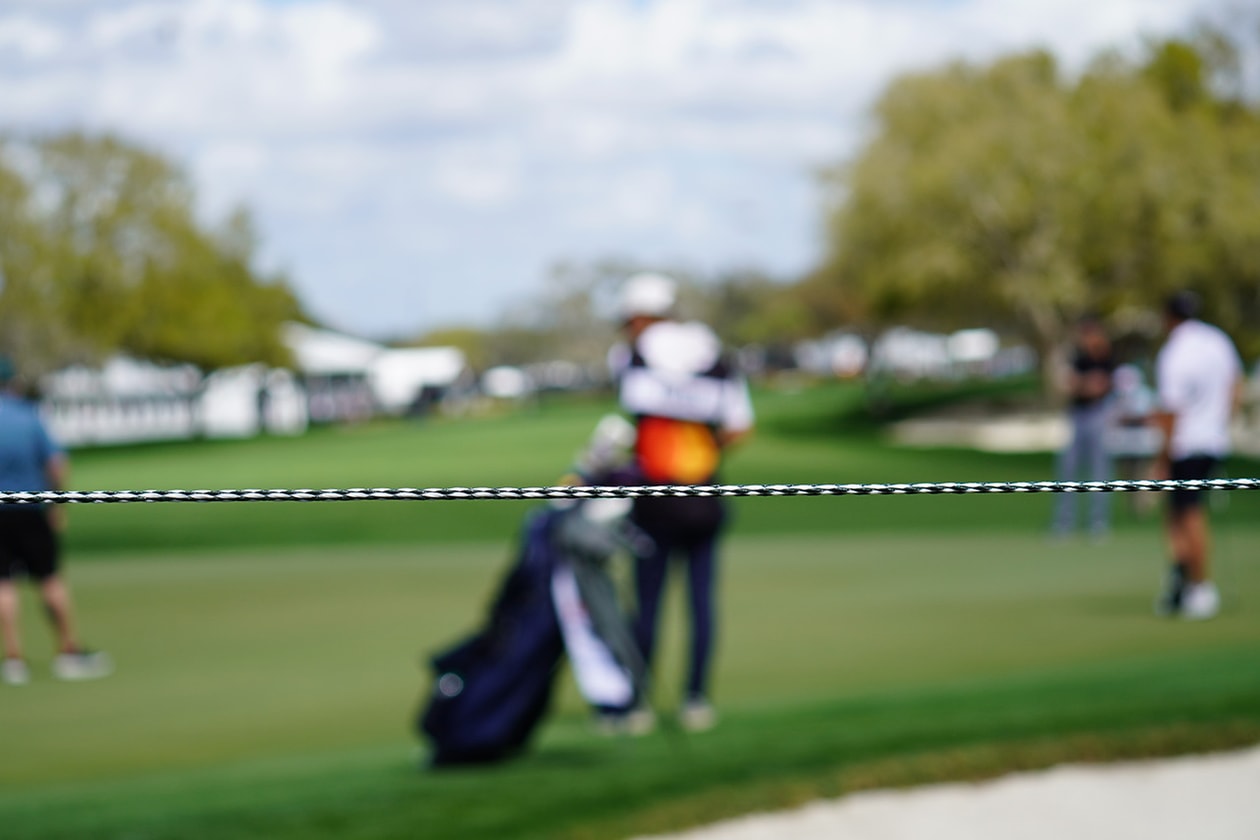
Walking alongside the group is another figure who quietly helps the day function. On the first tee, a PGA professional introduces himself as part of the pro-am support staff. Officially, he’s there to offer guidance and tips if players want them. In practice, his role is broader.
He helps keep the group moving, directs players where to stand and occasionally steps in to assist when someone is searching for a ball in the rough. At times he films swings, offering advice to a struggling player in the group. Between shots, we talk through strategy for upcoming holes like where to aim off the tee, where the safe misses are and how the greens tend to break.
He’s from the Tampa area, he explains, and much of his work involves organizing golf trips for large groups. Recently he hosted a trip to Cabot Citrus Farms, one of the newest golf destinations in the state.
What Pros Talk About
Inside the ropes, another layer of professional golf becomes visible. As the round progresses, Hovland occasionally turns to his swing coach, TJ Yeaton, to discuss the technical side of his game.
At the time, it seems like a typical mid-week tune-up session. Later, it becomes clear that something slightly more significant was happening: the pro-am marked Hovland’s first public round working again with Yeaton, a coach he had previously collaborated with earlier in his career.
The topic that comes up repeatedly is a miss with the driver, a high shot leaking to the right that costs both distance and control. Diagnosing that kind of issue now involves tools that go far beyond a 2D video. Yeaton describes using 3D biomechanics analysis, force plates and comparisons with earlier versions of Hovland’s swing when his clubhead speed was higher.
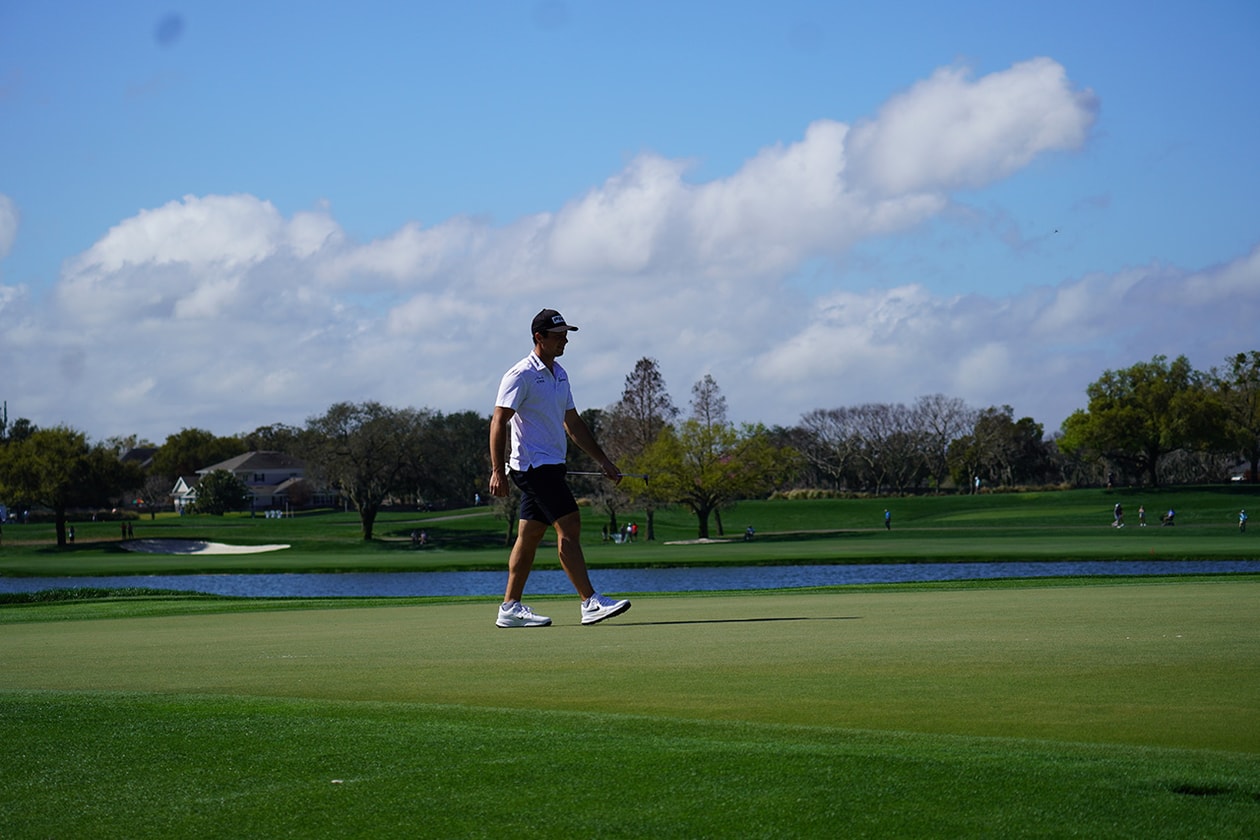
Later in the round, they drift into tour gossip, the kind of casual speculation that circulates between players during practice rounds. We laugh at something that’s said. Hovland glances over. “We’re going to have to make you sign an NDA after this.” For a few hours on Wednesday morning, that’s essentially what a pro-am offers: a temporary pass inside the ropes, where the conversations are a little looser and the distance between professional golf and the people who watch it becomes smaller.
Josh Reidelbach/The Dan Evans Show
The Business of Access
While players and coaches focus on performance, another set of relationships is developing around them: the pro-am exists partly as a business environment.
According Anne Valentzas, SVP of consumer marketing and sponsorships at Mastercard, events like the Arnold Palmer Invitational serve multiple purposes for sponsors. “We have a lot of C-suite partners here who love to golf, and we’re able to give them access to the pros in a way they normally can’t get.”
Similar access is sometimes extended to cardholders through the brand’s Priceless program, which offers fans the opportunity to walk inside the ropes with professionals during tournament week. And that access can create moments that are difficult to replicate anywhere else. One executive, she recalls, stepped onto a tee thinking of himself as a strong golfer. Then he watched the professional in his group hit a drive. “He said the ball went so far he couldn’t even see it.”
The Course as Equalizer
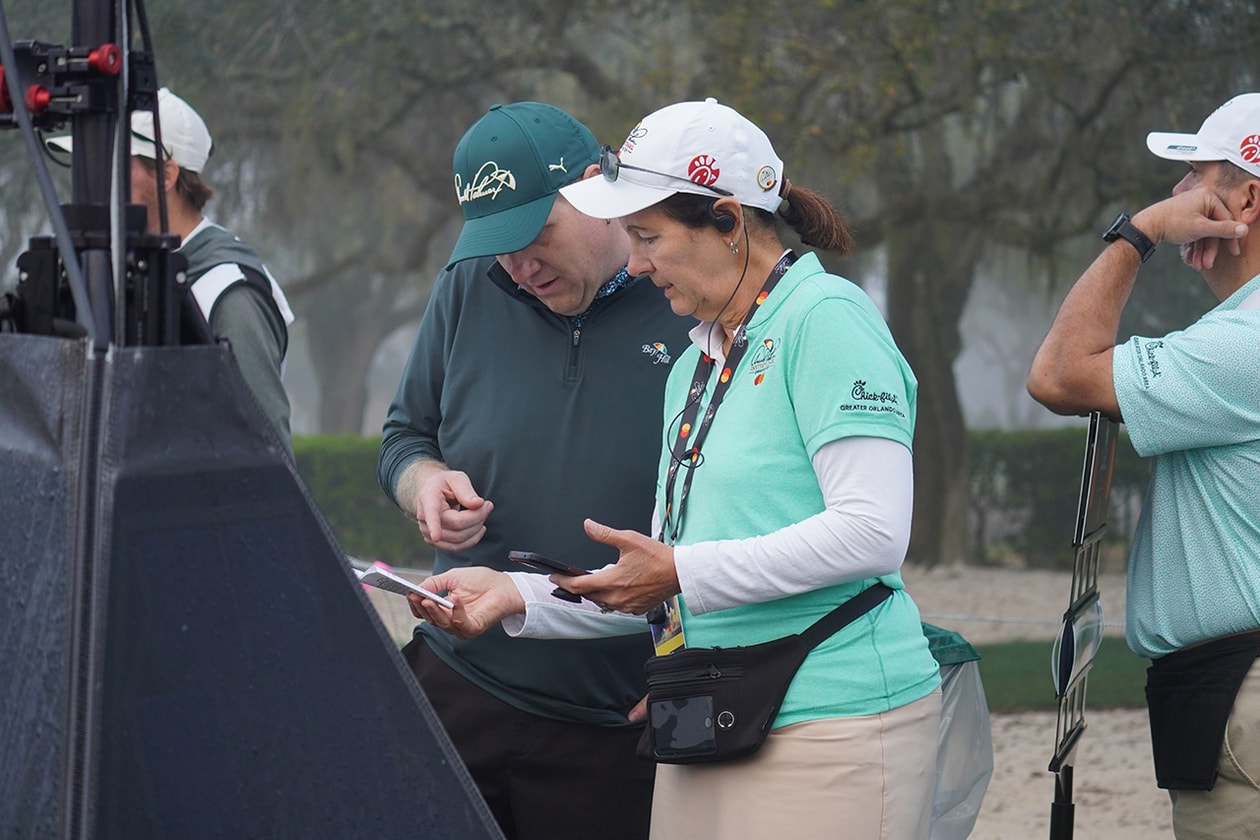
Josh Reidelbach/The Dan Evans Show
Throughout the round, Arnold Palmer’s Bay Hill continuously reinforces the difference between amateur and professional levels. Tee shots that are struck solidly find thick rough. Putts that appear straightforward roll out an extra few feet. Those margins add up over the course of 18 holes.
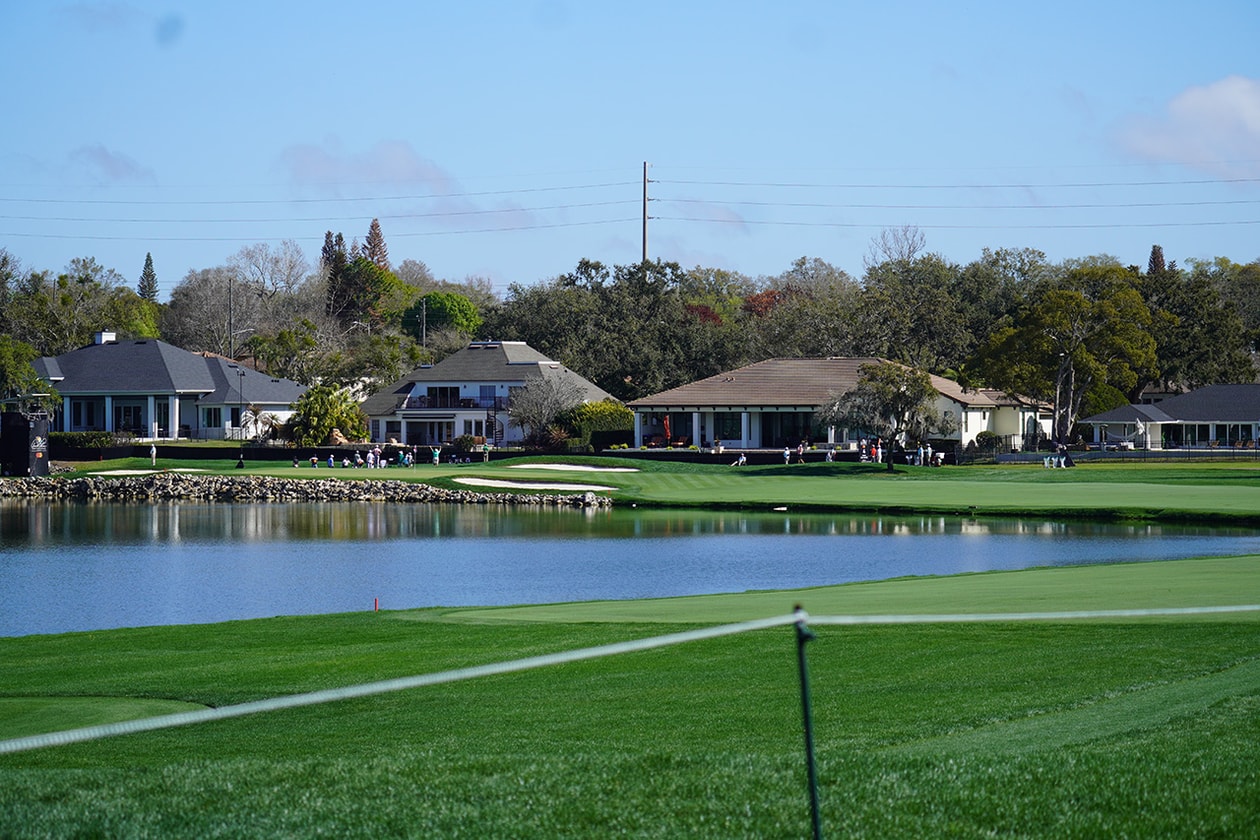
The mist eventually lifts, revealing fairways and greens that looked distant earlier in the morning. By the back nine, the tournament infrastructure feels more visible and the fans are lining the ropes, only adding to the pressure.
The Currency of the Day
By the time the final groups finish, the pro-am has produced far more than a round of golf. It has generated business conversations, technical discussions about golf swings, casual stories between players and guests and a handful of memories that participants will likely carry long after the tournament ends.
From the outside, the entry fee is the visible cost. Inside the ropes, the real currency is something else entirely. It’s time, access and the rare chance to spend a few hours inside the world of professional golf.


