








Devon Turnbull’s New Furniture Brand Was Born From His Love For Tokyo
What began as a search for furniture for his Tokyo house became ‘Oto no Kagu’, a collaboration with Karimoku Furniture that reworks the design logic of his OJAS speakers as seating, shelving and acoustic screens.
Words by Alice Morby
A couple of years ago, Devon Turnbull bought himself an abandoned house in Tokyo. Location-wise, it makes sense – he has a second studio there, where most of the components for his speakers are made. But it’s also a place that has been a constant source of inspiration for him as a designer, and putting down roots meant he could work with craftspeople he’s long admired.
In the early stages of renovation, he paid a visit to the Conran Shop in Daikanyama — a Japanese outpost of the London-founded brand – where he saw a table and shelving unit that he was “immediately attracted to”.
“That’s how I discovered Karimoku Case,” he says. “Both pieces were by the brand, and I saw them straight away as aspirational things to own.”

He then went on to visit the Karimoku Commons store in Aoyama, where he saw some of the collaboration collections. His mind went from renovating his own house to the potential for collaboration with his own brand OJAS. “The next day I flew back to New York, and just two days later I got a text that said, ‘Are you familiar with the furniture company Karimoku?’,” he says, describing it as an “outrageous coincidence”. “About a week later I was on a flight back to Japan for my first meeting with Karimoku about an exhibition and collaboration. The stars aligned”.
The result is Oto no Kagu By OJAS and Karimoku Furniture – a new brand born from Turnbull’s process of breaking down the design logic of his speakers and reworking it as furniture. Developed through Survey 03: Form Follows Feelings, a co-creation project by the brand’s Karimoku Research arm, the 15-piece launch collection spans modular seating, floor chairs, low tables, shelving and acoustic panels. Each piece comes in two finishes: Pure Oak, or Pewter Gray, the signature colour Turnbull has long used for his speakers.
“I’ve developed a design language over many years of designing things — speakers being the main thing — so those motifs materialise whether I’m designing a chair, a shelf or a camper van”
Devon Turnbull
When it came to the design process, Turnbull says he worked to turn the “design essence” of his speakers into furniture. One particular starting point came from a chair he’d designed for an exhibition titled “Not For Sale”, which – in another coincidence – turned out to share a lot of fabrication principles with an existing Karimoku chair. “The next day, I stayed in my hotel room in Kyoto just jamming – taking that basic armchair and building out sectional sofas, different versions of chairs, a chaise longue.”
Elsewhere, the acoustic panels he’d created for listening rooms became room dividers. “I started coming up with a whole design language that I think marries Japanese design aesthetics, the functional elements we need for a listening room, and the visual language I’ve developed through working for a long time,” he adds.
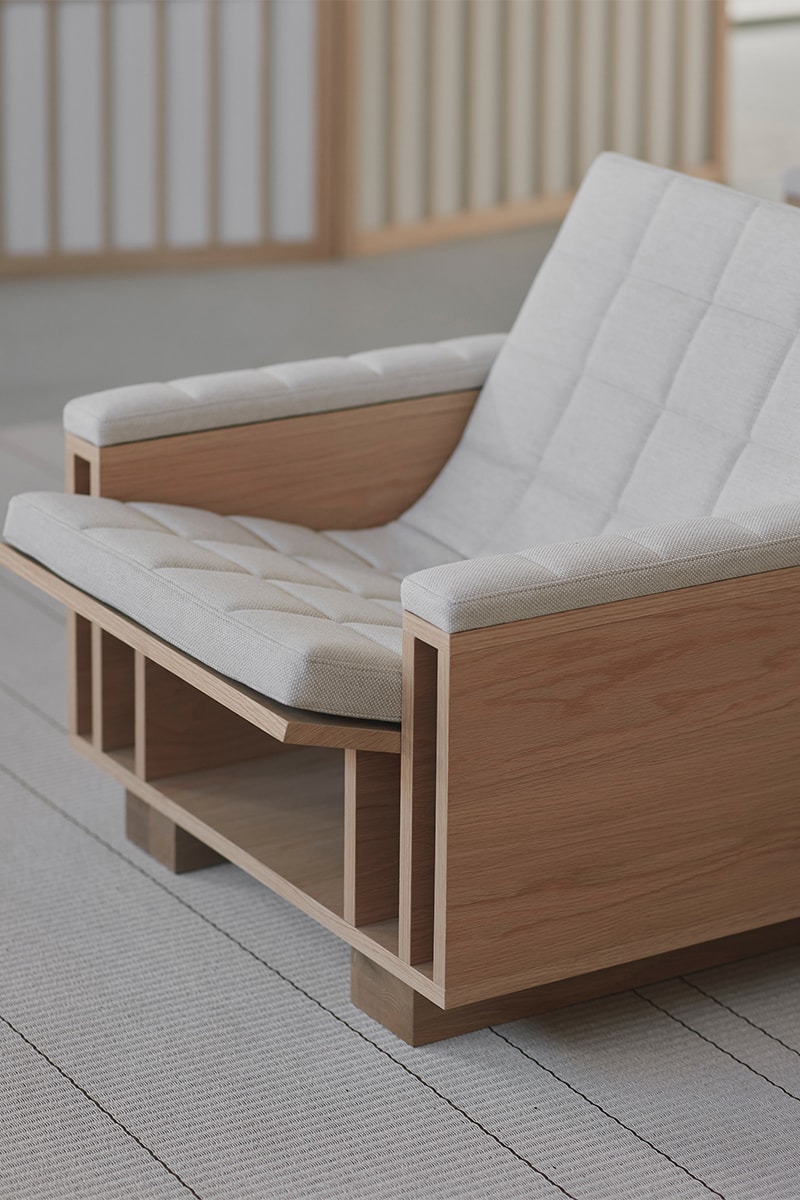
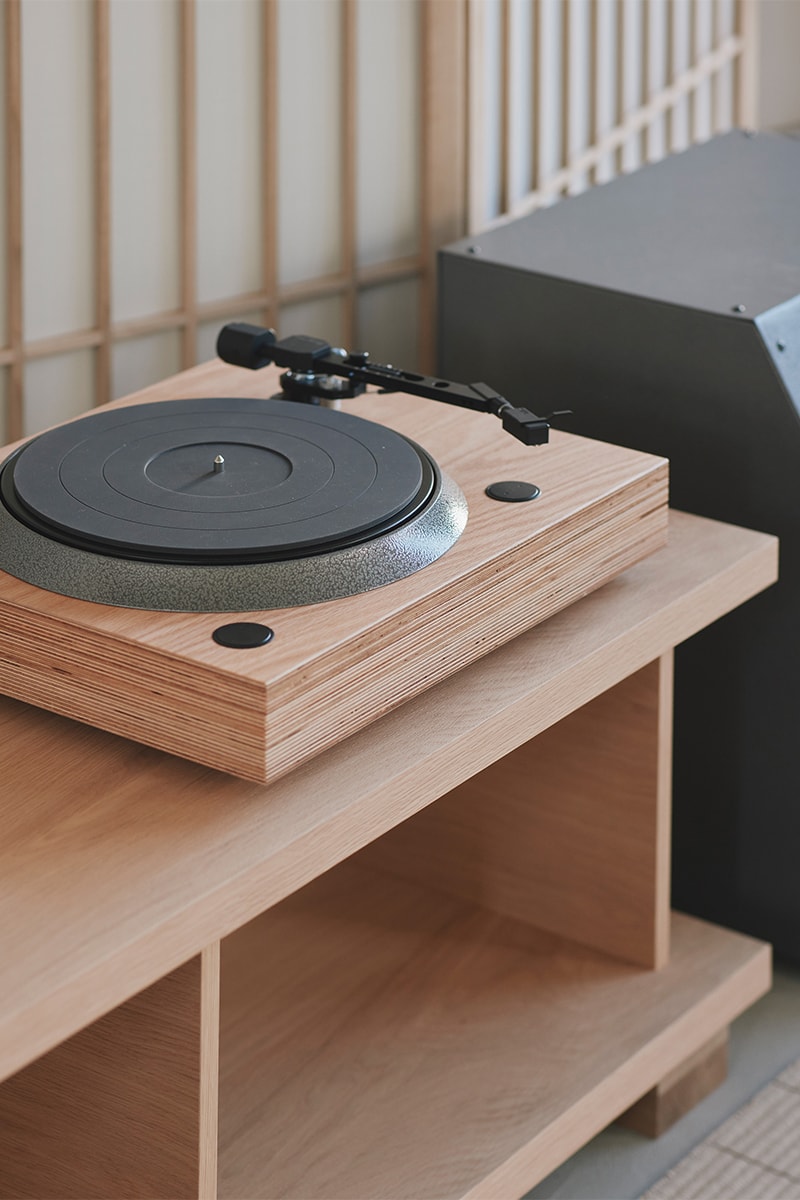
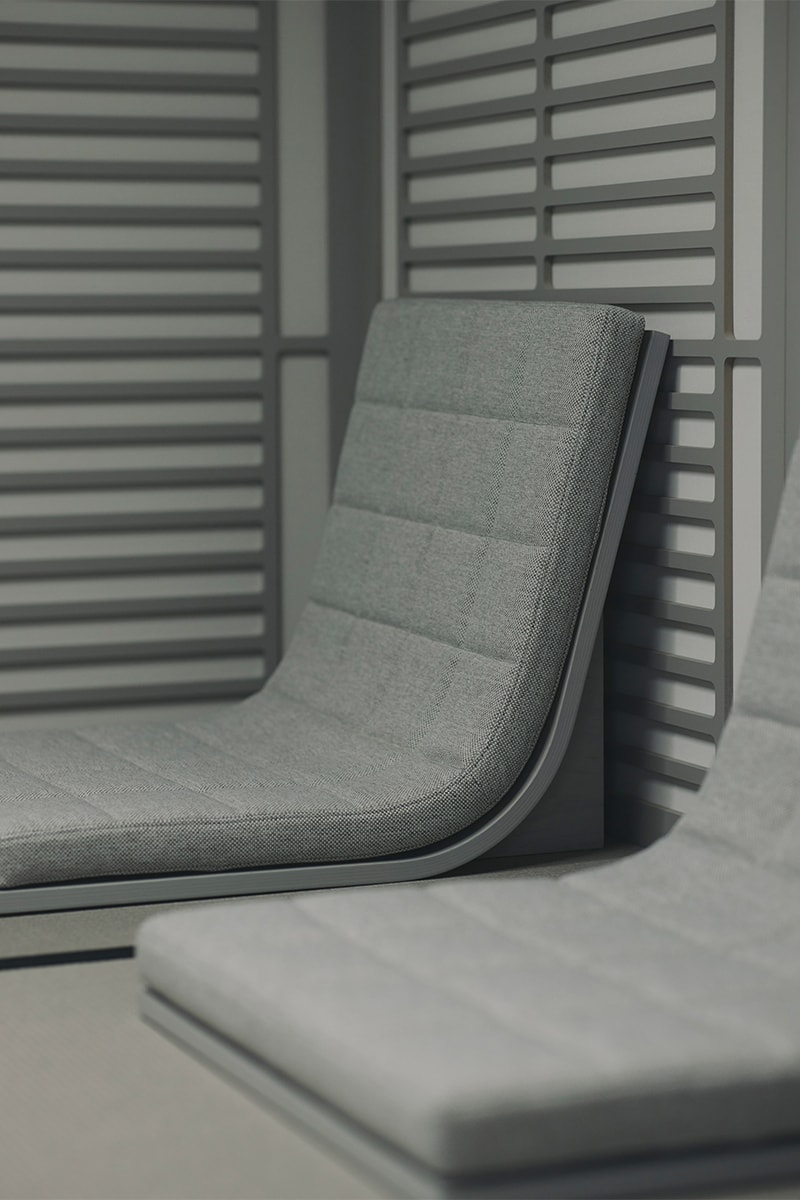
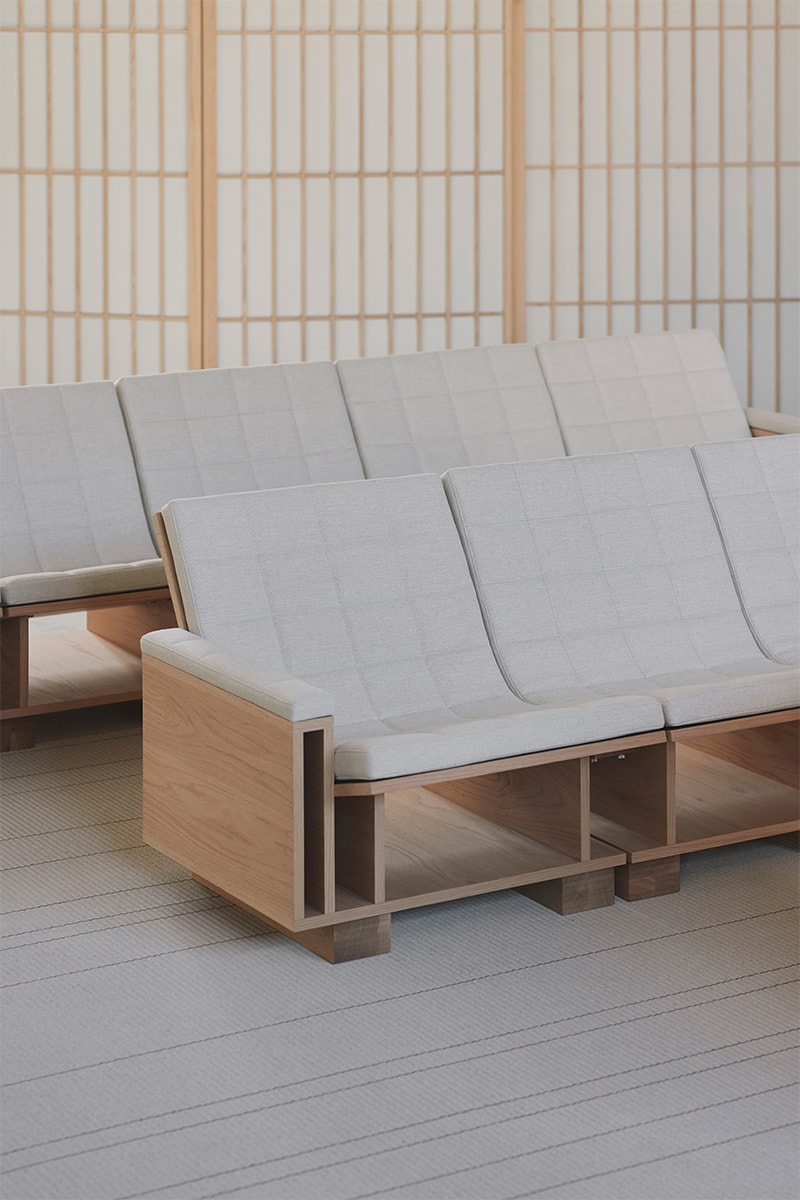
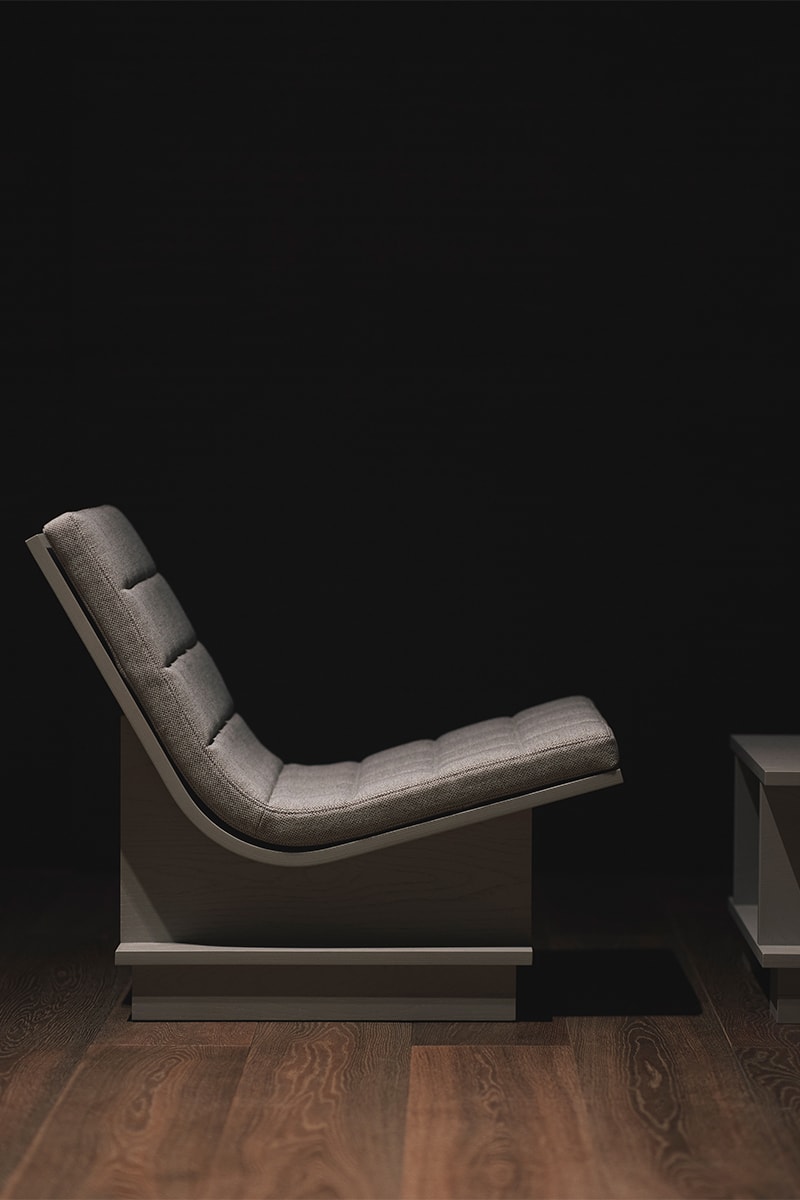
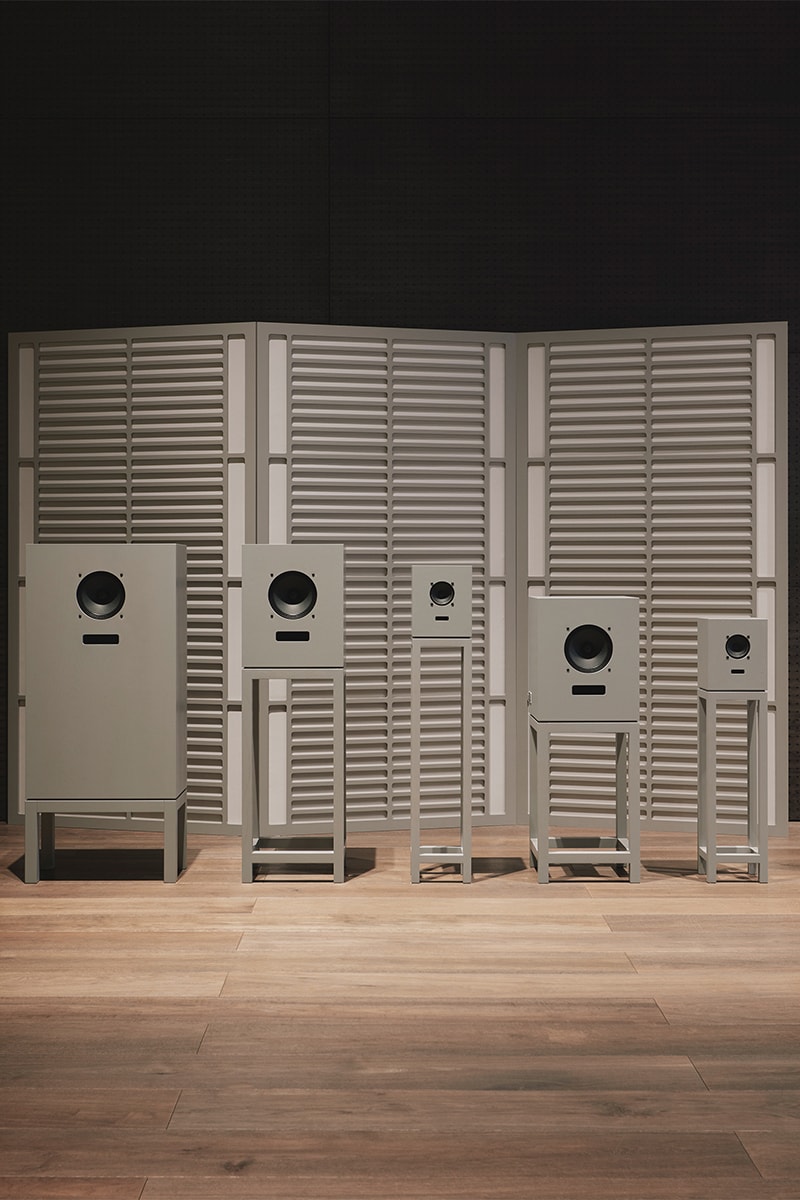
In the years since Turnbull started creating speakers and listening rooms, the two have become increasingly popular across design. In fact, you could argue that they’ve been a bit of a gateway into furniture for those more involved in adjacent industries such as music, fashion, or even film.
For Turnbull, though, a love for design has been long-standing. He started collecting in high school, and still lives with Eames and Bertoia chairs that he bought back then. Since then, his collection has grown to include the works of Poul Kjærholm, Hans Wegner and Jean Prouvé – “their work is a really important part of my life, just living with it,” he says.
“I’ve always dreamt of designing, particularly seating. I think seating is the pinnacle of design. Chairs have to be beautiful, comfortable and strong enough to support people sitting in them over and over. To me it’s the apex design medium in a lot of ways, and it had been my dream forever.”
That’s not to say the furniture is a speaker in disguise. “The last thing I’d want to do is put a speaker in a chair for no good reason,” he says. “Plywood boxes and moulded plywood curves are just the way I think about building things.”


Turning that thinking into furniture took just six months. Turnbull made several trips to Karimoku’s factories in Aichi to work with its craftsmen, refining the pieces from rough prototypes into something comfortable and durable enough to live with. All the casework and woodwork was made there – a natural fit, given Karimoku already fabricates the plywood for OJAS’s Tokyo speakers.
The finished collection is now on show at the Conran Shop in Daikanyama – the same store where, not so long ago, Turnbull was simply looking for something to furnish his new house.


