








Behind The Curtain of The “Performative Male”
How drinking matcha, listening to Clairo, and reading feminist literature have become entangled in the meme-ing of masculinity.

Behind The Curtain of The “Performative Male”
How drinking matcha, listening to Clairo, and reading feminist literature have become entangled in the meme-ing of masculinity.
A young man listening to Clairo on wired headphones sits on a park bench with an iced Matcha latte in hand. Armed with a Labubu plush charm, he opens the oversized tote bag he bought from a local bookstore. Inside, he rummages through his things for a cigarette and pulls out the book he’s been reading, All About Love by Bell Hooks. He’s on chapter one. This is the “performative” male.
He’s Jacob Elordi, carrying a Bottega Veneta bag in the same arm that he holds an iced Matcha latte. He’s Paul Mescal wearing a Clairo hoodie with short shorts and wired AirPods. He’s Pedro Pascal reading Austrian feminist novelist Olga Tokarczuk shirtless on the beach. As unserious as the “performative male” trend may be, where exactly does this interest in the “performative male” take root, and why does it elicit such a strong reaction?
jacob elordi with his bottega amdiamo bag in los angeles yesterday pic.twitter.com/xMlsfJKa6l
— Hunter (@highendhomo) March 29, 2023
The “performative male” is somewhat of a Gen Z-born archetype that has become the center of a viral meme. The social media posts, from short-form skits to text-based memes, satirize certain behaviors “performed” by men in public spaces. Criteria *specifically* include activities like listening to Clairo, drinking Matcha Oat lattes, and reading intellectual books, among other things.
The aesthetic construction of the metropolitan man can be traced to the end of the 19th century, when sociologists like Thorstein Veblen, and later 20th-century theorists like Pierre Bourdieu, described the shifting class relations and technologies that gave rise to modern archetypes like the Dandy.
In his 1899 text Theory of the Leisure Class, Veblen described the social stratifications that were rising among men of the Industrial Era: “He is no longer simply the successful, aggressive male — the man of strength, resource, and intrepidity.” Veblen explains that the man of leisure curates his tastes and interests meticulously, to demonstrate his knowledge of “the noble and the ignoble in consumable goods.”
A century later, French sociologist Pierre Bourdieu’s 1979 work Distinction: A Social Critique of the Judgment of Taste expanded further. He wrote that nothing is more distinguished than “the capacity to confer aesthetic status onto banal objects” and choices of everyday life, like clothing or decoration.
Echoes of this meticulous curation bolster the “performative male” archetype, a persona scrutinized for each and every detail in his presentation, from his use of analog devices to his niche cultural references.
Vogue/Gorunway.com

Vogue/Gorunway.com
Vogue/Gorunway.com
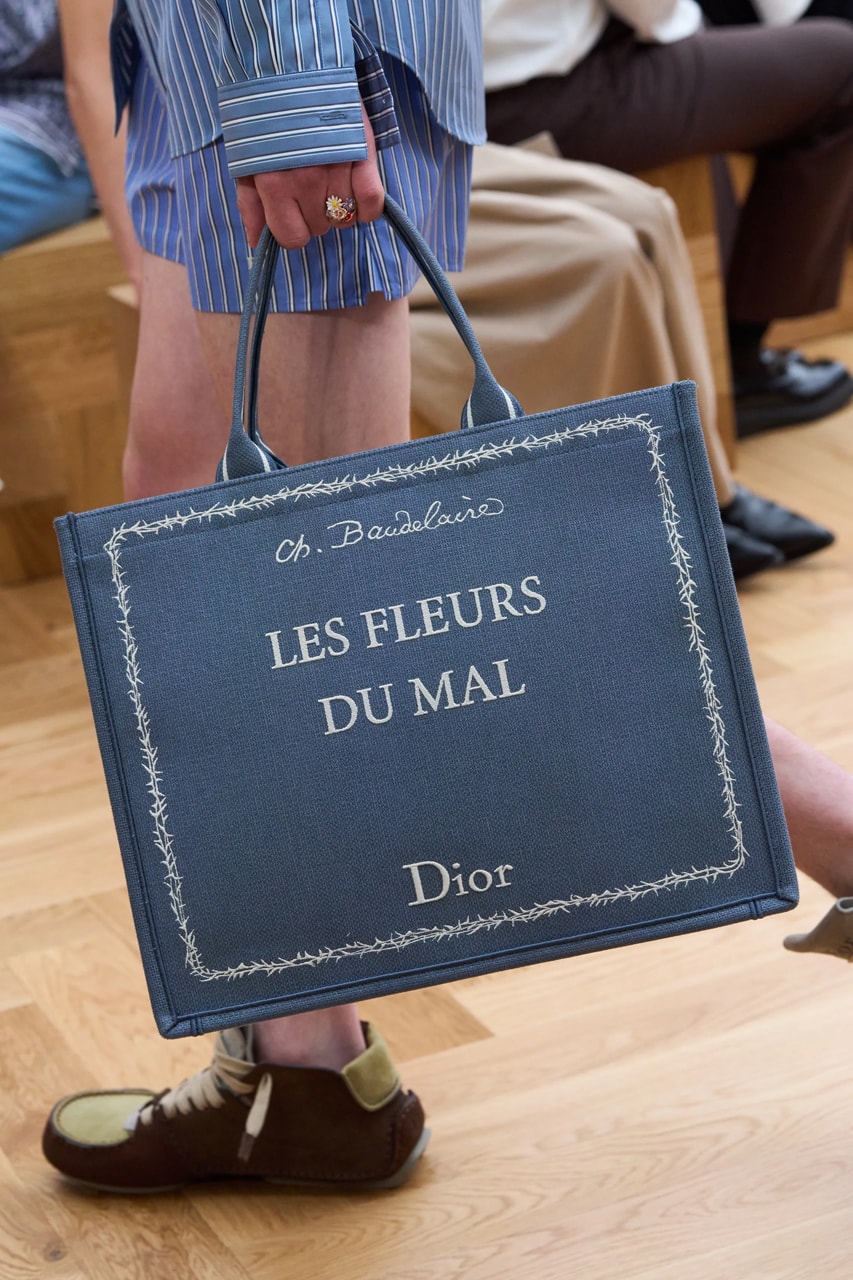
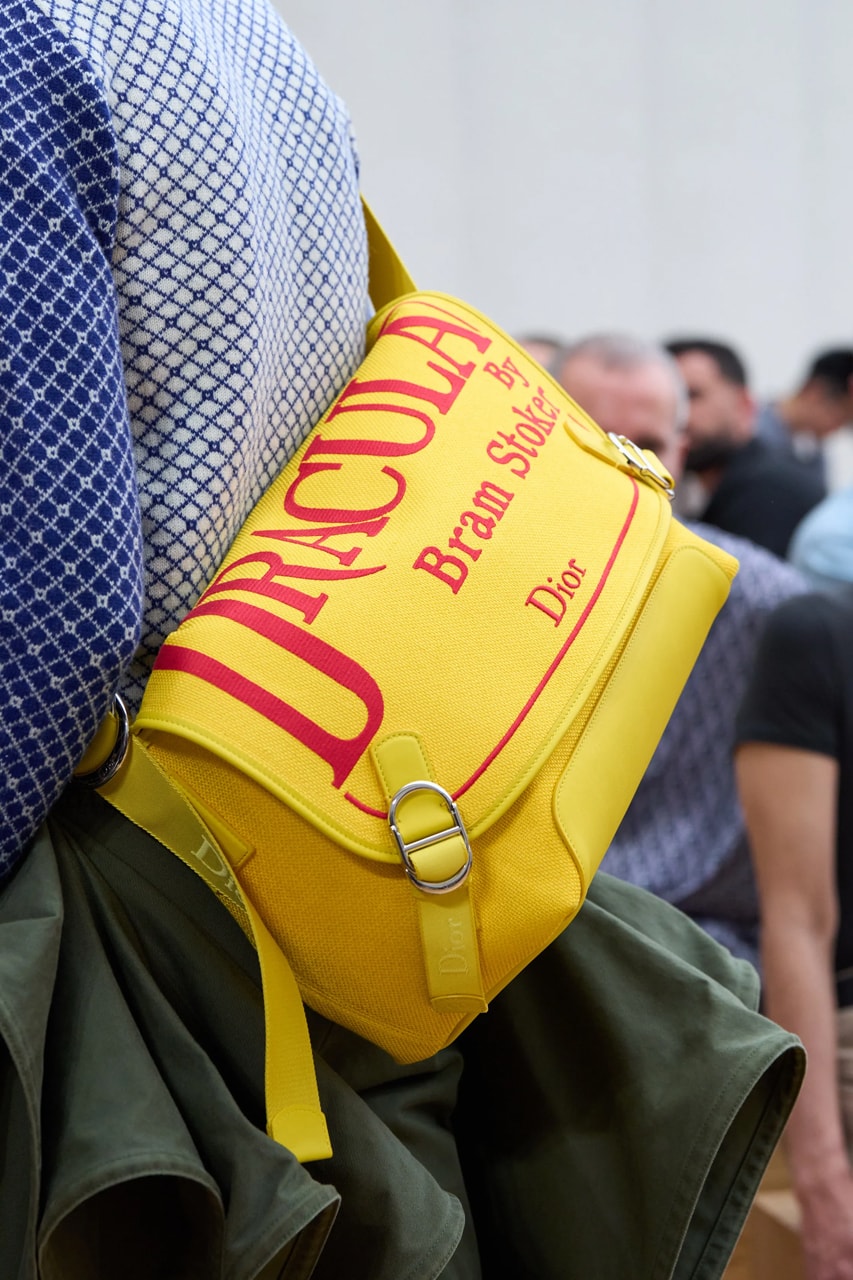
Now, the symbols of present-day male performance are being absorbed by fashion in trompe l’oeil designs and meme-fied marketing: Classic literature titles like Baudelaire’s Les Fleurs De Mal were transformed into handbags in Jonathan Anderson’s Dior SS26 debut, wired earphones have become the muse for Racer Worldwide’s new RacerPods Necklace, and Aminé x New Balance announced the new Biblioteca 2000 with a billboard that read “Stop performative reading. Your matcha will understand.”
From the early 2000s onwards, the lives of young internet users have been mediated and publicized through digital platforms and social networks like Instagram, Snapchat, and TikTok. Could it be that broadcasting and curating our daily activities, cultural opinions, and lifestyle choices ingrained an always-on performance mindset in people?
Carrera Kurnik, the strategist and anthropologist behind Internet Anthropology, uses her short-form video content to break down how different social theories can help to decode today’s cultural phenomena, including everything from luxury Labubus to Gen Z labor politics. On the increased scrutiny towards the “performative,” Kurnik said to Hypebeast, “We’ve come to place high value on what is ‘authentic,’ and therefore ‘performative’ has become its undesirable opposite.”
@jen.trt 1st performative male contest in Canada taking place in Toronto 🤣🤣🤣 #performativemale ♬ original sound – Jen | Toronto Date Guide – Toronto Date Guide | Jen
Kurnik references thinkers like Erving Goffman, whose work can give us insight into the current growing tensions between performance and authenticity. Goffman’s 1956 text, The Presentation of Self in Everyday Life, centers on the belief that all social life is rooted in performance. “Young people feeling the pressure to become a personal brand on social media has not only created a culture of performance but has also created the widespread skepticism of performance,” she added.
“We live in the age of conspiracies, grifts, and scams. This cultural landscape has many wondering if people really back the messages they broadcast or if its all just a performance for personal gain”
In addition to this growing mindset of performance, rampant disinformation, further exacerbated by AI-generated content, has also added to the hypervigilance about authenticity and being “real.” “We live in the age of conspiracies, grifts, and scams. This cultural landscape has many wondering if people really back the messages they broadcast or if its all just a performance for personal gain,” Kurnik said.
In truth, people are always performing, in public and in private, both on and off camera. Our societies and regional cultures are built on certain attitudes, behaviors, and rituals, many of which we perform unconsciously. What is changing is how men are more “actively considering the subjectivity of their female audience when constructing their performance,” said Kurnik. The male’s central role in the meme is an important aspect to consider. Growing up amidst pivotal movements for LGBTQ+ rights and intersectional feminism, young men have not been immune to the effects of shifting gender dynamics.
The internet’s lookalike competition trend, which has sent flocks of men to city parks dressed as different celebrities, offers yet another vibrant example of male performance in the mainstream. Naming viral instances, including recent Timothee Chalamet and Pedro Pascal lookalike events in New York, Kurnik explained that though the pageants are taken ironically, their focus on heartthrobs instead of sports stars or manosphere podcasters is a significant detail. “They display a shift in who performs in the emerging dating culture.”
View this post on Instagram
However, men too have come to appropriate the meme for their own purposes, often framing the “performer” as effeminate or weak. “I’ve noticed men online tend to use terms like “simp” or “whipped” to refer to other men who are seen to be performing for women. These terms aim to shame men back into a social position of audience rather than performer,” Kurnik said.
Additionally, the template for the “performative male” largely aligns with preconceived ideas about what women are supposed to enjoy in Western society: the emotional depth of female singer-songwriters like Clairo, reading self-help and theory from feminist thinkers like Bell Hooks, and carrying around some form of tote bag. One might conclude that the meme is simply another way to reinforce outdated gender norms, but the matter is slightly more complicated.
With the “performative male” being a term coined predominantly by women, Kurnik cites “heteropessimism” as a cultural factor that highlights the suspicion that the feminism performed by men may not align with their authentic views. In this case, the male can almost be said to be embodying meta-masculinity: self-aware yet ulterior. “For some women, there is a fear of who the performative male may be when the performance ends,” she added.
In a world still ruled by patriarchal belief systems, the caution is a rather rational response. While acknowledging the validity of such statements, it’s also worth asking whether the hypervigillance around being perceived as “performative” is holding men back from breaking the mold and expanding their perspectives.
If potential ulterior motives are ruled out, young men developing their awareness of female subjectivity could be a precursor to transgressing the ideological hurdles that still divide heterosexual men and women. Indeed, it was Bell Hooks who famously said, “Come closer and you will see: feminism is for everybody.”


